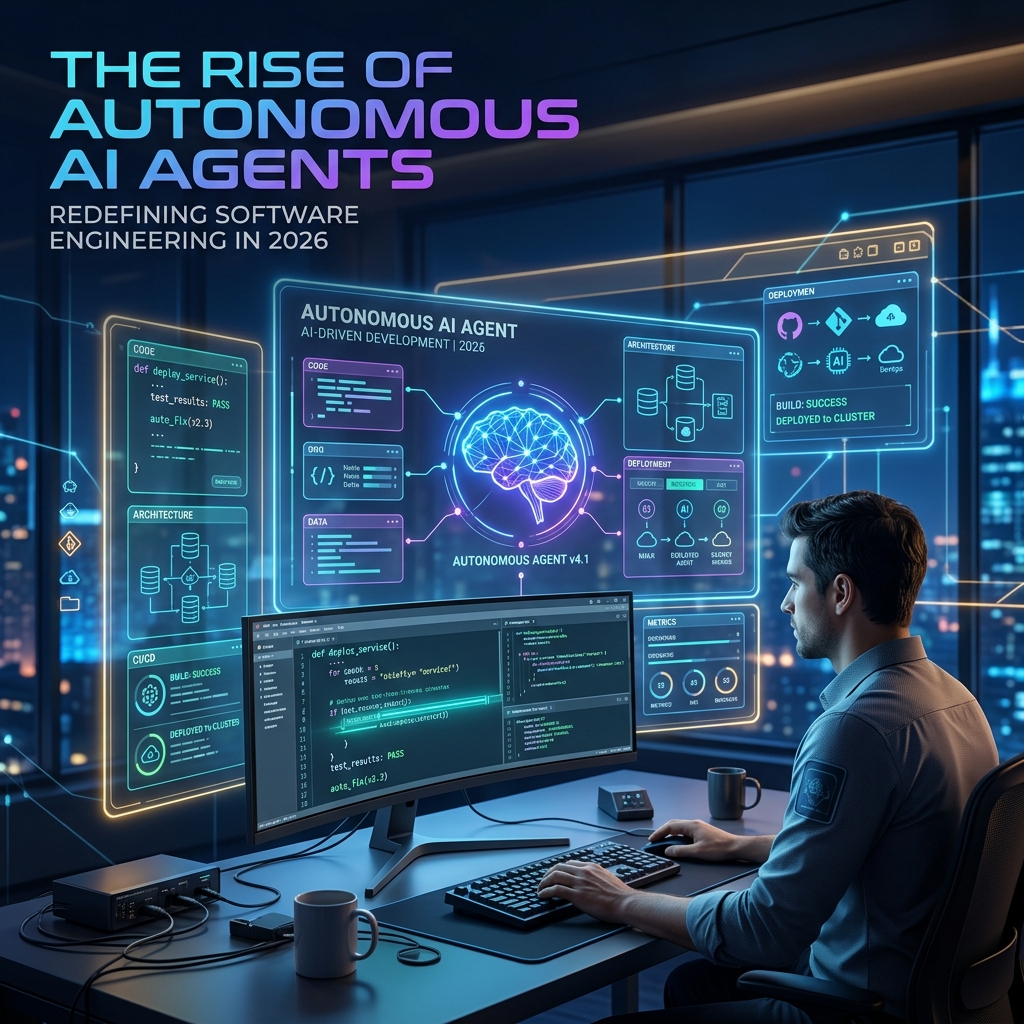
Beyond Conversational UI: The Age of Action
For the past few years, large language models (LLMs) have wowed us with their ability to write prose, compile code snippets, and translate languages. But in 2026, the boundaries of generative AI have expanded. We are moving from passive chat interfaces to active execution environments. The breakthrough driving this change is the Large Action Model (LAM).
Unlike standard text models, a Large Action Model is trained directly on application interfaces, API contracts, and user interaction sequences. Instead of describing how to accomplish a task, a LAM can log in, navigate a system, handle security authentication, and execute the task on your behalf.
The Core Technology Behind LAMs
How do LAMs operate under the hood? They rely on a combination of deep reinforcement learning, visual layout analysis, and semantic understanding of structured APIs:
- Visual Parse Engines: Rather than depending on formal element locators (like HTML IDs or XPath), LAMs analyze the visual pixels of a screen just like a human eye, allowing them to remain robust even when UI layouts shift.
- State-Action Networks: Trained on thousands of hours of expert workflow demonstrations, these models map the current state of a task to the next logical action (e.g. click, input, submit).
- API Synthesis Layer: When interacting with standard web services, a LAM can synthesize and call REST or GraphQL queries on the fly, skipping the visual UI altogether to achieve high performance.
A Practical Comparison: LLM vs. LAM
| Feature | Large Language Model (LLM) | Large Action Model (LAM) |
|---|---|---|
| Core Output | Generates text, markdown, or code strings | Executes actions, clicks, and API calls |
| Orientation | Reactive (answers prompts) | Proactive (pursues multi-step goals) |
| Tool Use | Calls discrete tools via prompt syntax | Fully integrates and controls operating systems |
The Future of Everyday Computing
The rise of Large Action Models will inevitably change how we design software. In the future, apps won't just offer complex dashboards for humans to click through; they will expose clean action endpoints for LAMs to interact with. As developers, mastering the integration of LAMs and building the infrastructure to support them is the ultimate high-leverage skill of this decade.