Beyond Static Grid Layouts
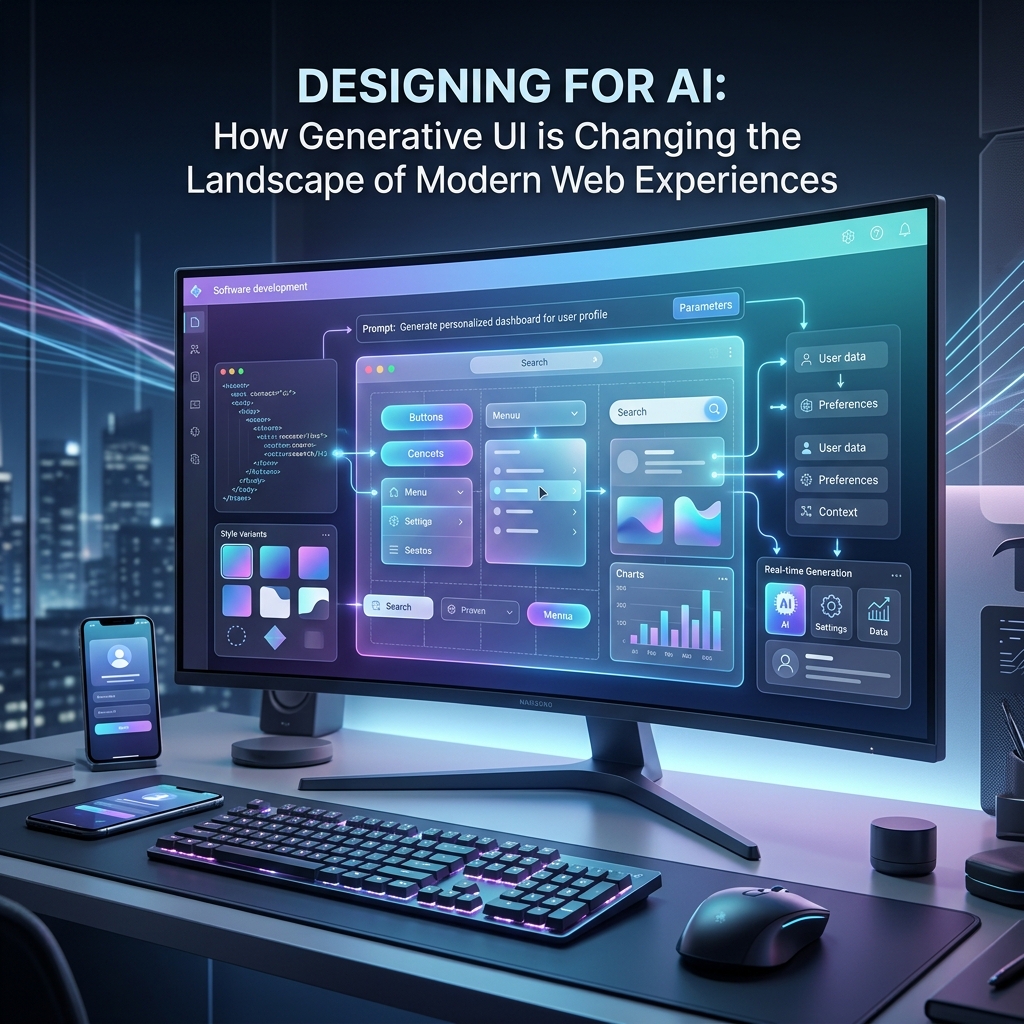
For the past decade, web design has relied on static responsive frameworks. Whether you access a site on mobile or desktop, the structure remains identical—a grid of modular cards and navigation menus. In 2026, artificial intelligence is breaking this mold by introducing hyper-personalized, dynamic interfaces that restructure themselves in real time.
By analyzing a user's interaction speed, historical usage patterns, current goals, and accessibility requirements, frontends can dynamically adjust visual hierarchy, color palettes, and information density on the fly.
The Infrastructure of a Dynamic UI
Building a dynamic interface requires a strict, token-based design system. Instead of hardcoding layout grids, developers build modular components that can be assembled dynamically by layout models:
- Design Tokens: Core style values (spacings, typography scales, glassmorphism filters, border radiuses) are managed as variable tokens that the layout engine can adjust seamlessly.
- Modular Assembly: Web pages are built out of self-contained, micro-interactive components that can rearrange their layout structure without breaking the core state.
- Contextual Prompts: Dynamic interfaces utilize fast, lightweight models to predict which components a user needs next, rendering them proactively with smooth view transitions.
The Visual Wow Factor
Modern user experiences must delight users at first glance. Incorporating premium visual systems—such as vibrant HSL color schemes, sleek dark modes, subtle glassmorphic backdrop-filters, and soft micro-animations—delights the user and builds trust in your software's craftsmanship.