Introduction & The Problem
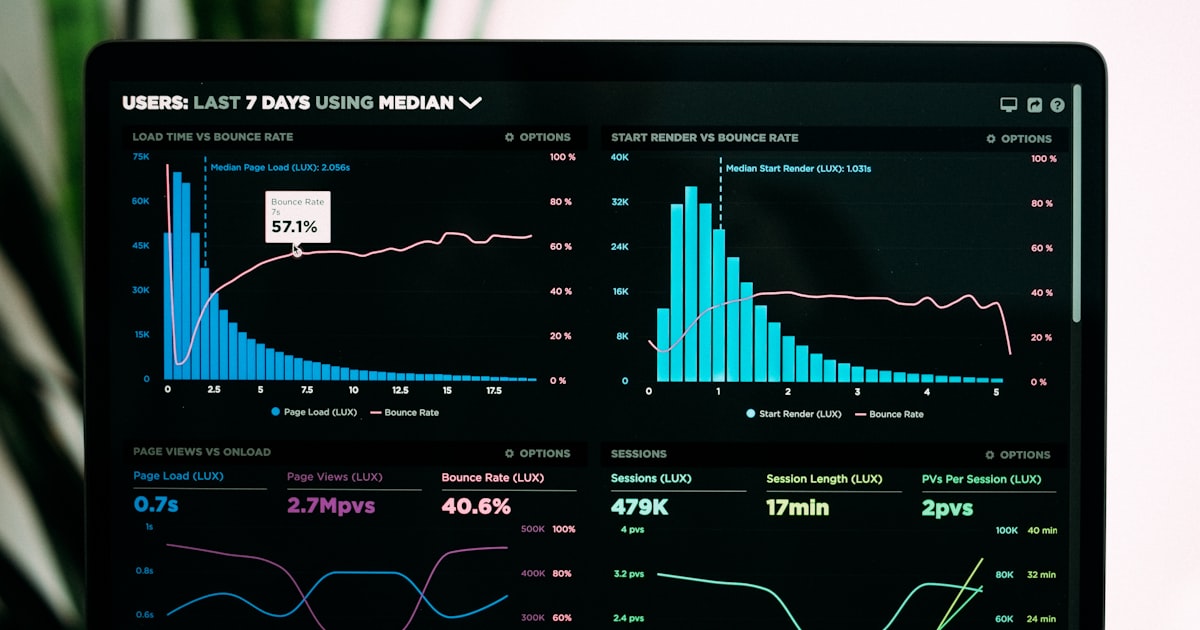
The promise of the cloud – infinite scalability, agility, and pay-as-you-go pricing – is incredibly compelling for businesses. Yet, for many, that promise often comes with a hidden caveat: a monthly bill that can quickly spiral out of control. Organizations frequently find their cloud spending ballooning unexpectedly, eating into precious margins and hindering their ability to innovate or even sustain growth.
The root causes are varied: over-provisioned resources sitting idle, choosing instance types that are too large for the actual workload, retaining old or unused data in expensive storage tiers, or simply a lack of visibility into where spending truly occurs. The consequences are dire: reduced profitability, stalled development on new features due to budget constraints, and a general sense of being held hostage by cloud infrastructure costs.
This article addresses this critical challenge head-on. It's a common misconception that cost optimization inevitably means sacrificing performance or reliability. In reality, a well-optimized cloud environment is often a more performant, resilient, and financially sustainable one. We'll explore practical strategies and architectural adjustments to significantly reduce your AWS bill without compromising your application's integrity.
The Solution Concept: A FinOps Approach to Cloud Cost Management
To effectively tackle runaway cloud costs, we need a systematic approach. Enter FinOps – a portmanteau of Finance and DevOps. FinOps is an evolving operational framework and cultural practice that brings financial accountability to the variable spend model of the cloud. It's about empowering teams with real-time insights into cloud spending and fostering collaboration between engineering, finance, and business teams to make data-driven decisions.
The core pillars of FinOps are:
- Visibility: Understanding where your money is going with granular detail.
- Optimization: Implementing strategies to reduce waste and maximize value.
- Governance: Establishing policies and guardrails to ensure cost-efficient practices.
Our focus will be on key areas that typically account for the largest portions of an AWS bill: compute (EC2, Lambda), storage (S3, EBS), databases (RDS, DynamoDB), and networking. By strategically optimizing these components, we can achieve substantial savings.
Step-by-Step Implementation: Actionable Strategies
1. Rightsizing Compute Resources (EC2, RDS)
One of the most common sources of cloud waste is over-provisioned compute resources. Developers often choose larger instance types 'just in case' or based on initial assumptions that don't reflect actual usage. This leads to paying for CPU, memory, and networking capacity that is rarely, if ever, utilized.
Solution: Leverage AWS Compute Optimizer and consistent monitoring.
- Analyze Usage: Monitor CPU utilization, memory usage (requires CloudWatch agent), and network I/O over an extended period (at least 2-4 weeks) to establish a baseline.
- AWS Compute Optimizer: This service analyzes your EC2 and Auto Scaling group configurations, providing recommendations for optimal instance types based on historical usage patterns. It can suggest smaller, cheaper instances or even a more cost-effective instance family.
- Action Plan: Implement recommendations in stages, testing thoroughly after each change to ensure no performance degradation.
Here's a conceptual way to check EC2 instance type via CLI (though Compute Optimizer provides richer insights):
aws ec2 describe-instances --filters "Name=instance-state-name,Values=running" \
--query "Reservations[*].Instances[*].[InstanceId,InstanceType,State.Name]" \
--output table
2. Leveraging Discount Models (Reserved Instances & Savings Plans)
For stable, predictable workloads, committing to a certain level of usage in advance can unlock significant discounts.
- Reserved Instances (RIs): Offer up to 75% discount compared to On-Demand prices for EC2, RDS, ElastiCache, Redshift, and DynamoDB. You commit to a specific instance family, region, and sometimes operating system for 1 or 3 years.
- Savings Plans: More flexible than RIs, offering discounts (up to 72%) in exchange for a commitment to a consistent amount of compute usage (measured in USD/hour) for 1 or 3 years. This applies across EC2, Fargate, and Lambda, regardless of instance family, region, or operating system.
Strategy: Analyze your historical On-Demand spend to identify consistent usage patterns. Savings Plans are generally recommended for their flexibility across compute services, while RIs might be suitable for very specific, stable database instances.
3. Embracing Serverless Architectures (Lambda, SQS, DynamoDB)
Serverless computing radically shifts the cost model from provisioned capacity to pay-per-execution, eliminating costs associated with idle servers.
- AWS Lambda: You only pay when your code runs, for the duration it executes, and the memory consumed. This is ideal for event-driven functions, API backends, and data processing.
- Amazon SQS & SNS: Message queueing and notification services that scale automatically and charge per message or notification, removing the need for dedicated servers.
- Amazon DynamoDB: A NoSQL database that offers on-demand capacity, meaning you only pay for the reads and writes your application performs, and the storage it consumes.
Example: Replacing a small API running on a dedicated EC2 instance with AWS Lambda and API Gateway can dramatically reduce costs, especially for applications with fluctuating traffic patterns.
// Example Lambda function (Node.js)
exports.handler = async (event) => {
  const response = {
    statusCode: 200,
    body: JSON.stringify('Hello from Lambda!'),
  };
  return response;
};
4. Optimizing Storage (S3 Intelligent-Tiering, Lifecycle Policies)
Data storage, particularly in object storage services like S3, can accumulate significant costs if not managed effectively. Storing infrequently accessed data in expensive 'standard' tiers is a common oversight.
- Amazon S3 Intelligent-Tiering: This storage class automatically moves objects between two access tiers – one for frequent access and one for infrequent access – based on changing access patterns. This can result in significant cost savings without performance impact.
- S3 Lifecycle Policies: Define rules to transition objects to cheaper storage classes (e.g., S3 Glacier Deep Archive for long-term backups) or expire objects after a certain period. This is crucial for managing logs, backups, and old versions.
Example: A lifecycle policy to archive objects older than 90 days to Glacier and delete them after 365 days.
{
  "Rules": [
    {
      "ID": "MoveToGlacierAndExpire",
      "Filter": {
        "Prefix": "logs/"
      },
      "Status": "Enabled",
      "Transitions": [
        {
          "Days": 90,
          "StorageClass": "GLACIER"
        }
      ],
      "Expiration": {
        "Days": 365
      }
    }
  ]
}
5. Implementing Cost Visibility & Governance
You can't optimize what you can't see or control.
- AWS Cost Explorer: This tool provides granular visibility into your spending, allowing you to analyze costs by service, resource, linked account, and tags. Set up custom reports to track specific cost centers.
- AWS Budgets: Create custom budgets to track your costs and usage from a consolidated perspective. Set up alerts to notify you when actual or forecasted costs exceed your defined thresholds.
- Resource Tagging: This is arguably the most crucial governance practice. Implement a consistent tagging strategy (e.g., 'Project', 'Owner', 'Environment') across all your AWS resources. This enables you to accurately allocate costs to specific teams, projects, or environments, making optimization efforts highly targeted.
Optimization & Best Practices
- Continuous Monitoring: Cloud cost management is not a one-time project; it's an ongoing discipline. Regularly review your Cost Explorer reports, Compute Optimizer recommendations, and budget alerts.
- Automate Shutdown of Idle Resources: Use AWS Lambda functions to automatically stop non-production EC2 or RDS instances during off-hours (evenings, weekends) to save costs.
- Delete Unused Resources: Periodically audit for and delete orphaned EBS volumes, unattached Elastic IPs, old snapshots, and unused load balancers. These often incur charges without providing value.
- Leverage Multi-Account Strategy: For larger organizations, separating workloads into different AWS accounts (e.g., dev, staging, prod) simplifies cost allocation and budget management.
- Foster a FinOps Culture: Encourage engineering teams to consider cost implications during architectural design and development. Provide them with the tools and visibility to make cost-aware decisions.
Business Impact & ROI
The return on investment for cloud cost optimization is immediate and profound:
- Tangible Savings: Businesses can realistically expect to reduce their AWS bill by 20% to 40% through effective rightsizing, discount models, and storage optimization. For a SaaS company spending $50,000/month on AWS, this translates to $10,000 to $20,000 in monthly savings.
- Improved Profitability: Direct reduction in operational expenses directly boosts the bottom line, freeing up capital that can be reinvested into the business.
- Accelerated Innovation: Reinvesting saved funds into research and development, hiring more engineers, or building new features can significantly accelerate product development and market competitiveness.
- Enhanced Performance & Reliability: Often, optimizing resources means right-sizing them to their actual needs, which can lead to better performance by eliminating bottlenecks from oversized, inefficient resources. Serverless architectures, by their nature, are designed for high availability and scalability.
- Predictable Scaling: A clear understanding of cost drivers allows businesses to more accurately forecast expenses as they scale, making financial planning more robust.
Conclusion
Cloud infrastructure is a powerful enabler of modern business, but its costs demand proactive and continuous management. By adopting a FinOps mindset and implementing strategic optimizations like rightsizing, leveraging discount models, embracing serverless, and smart storage management, organizations can transform their cloud expenditure from a mysterious liability into a predictable, high-value asset.
Start small, gain visibility, and iterate. The journey to a leaner, more efficient cloud environment is continuous, but the financial and operational benefits are well worth the effort. It's not about spending less; it's about spending smarter, ensuring every dollar invested in the cloud delivers maximum business value.